Design and identity
Make every part of the business feel connected.
We turn the character of your business into a usable visual system. Identity, language and interface decisions work together, so customers recognise you and your team can create new material without starting again.
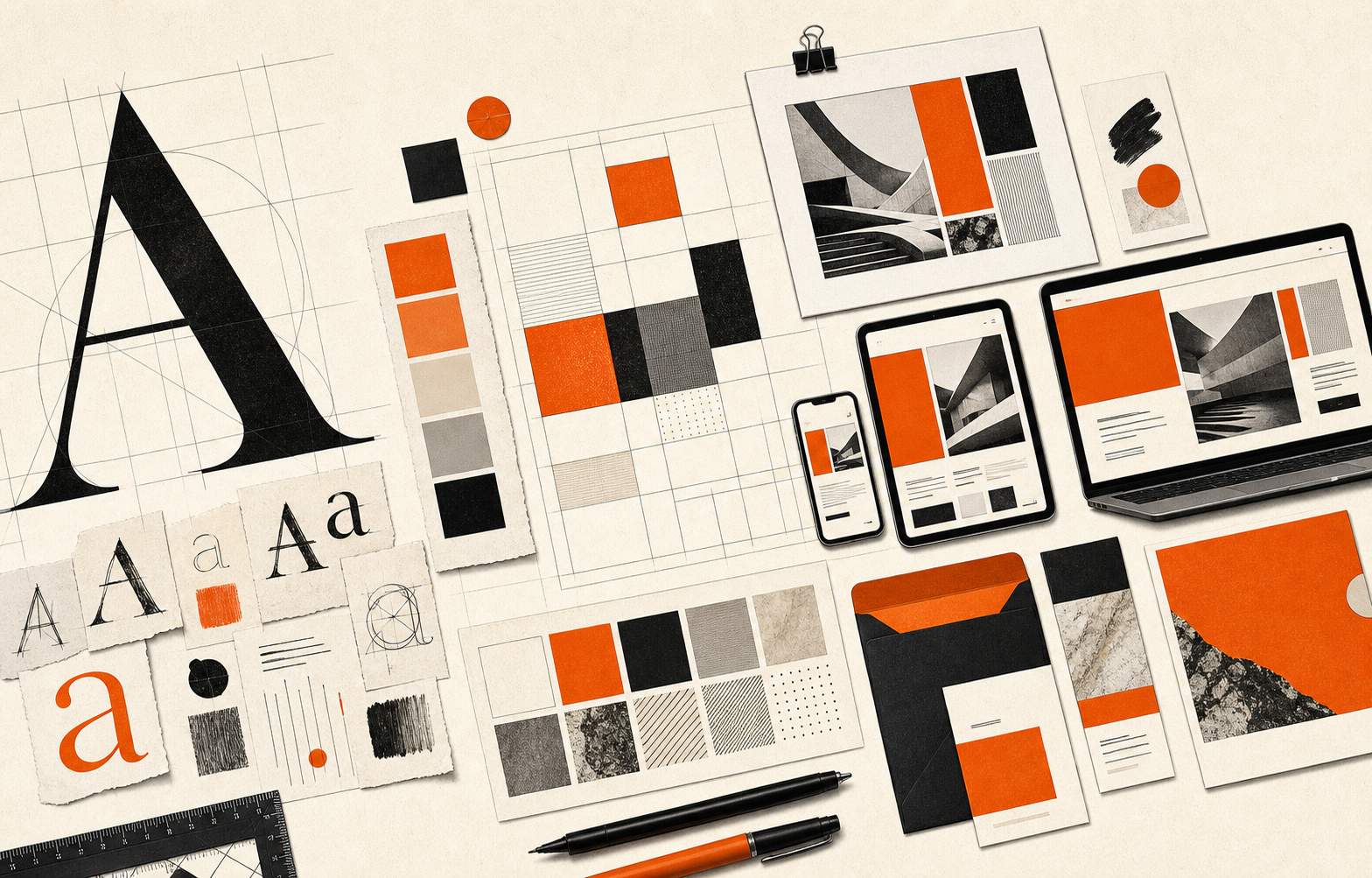
Recognition is built through consistent decisions.
A logo cannot carry the whole identity. People meet your business through pages, proposals, forms, emails, social posts and products. Each encounter should feel related without becoming repetitive.
We define the few rules that make the largest difference, then test them in real interfaces and content. The result is not a brand theatre exercise. It is a system people can use.
For businesses whose identity no longer holds together
Create a design language people recognise and your team can actually use.
This work fits businesses with an inconsistent identity, a website that no longer represents them or a growing set of materials that feel unrelated. We preserve what is distinctive and replace guesswork with shared rules.
Who you are
Translate the business character into a recognisable visual and verbal direction without borrowing the category's clichés.
How to use it
Define practical type, colour, imagery, layout and interface rules your team can apply with confidence.
Where it must work
Test the identity across the actual website, content and product moments where customers make decisions.
Design work, matched to the problem
Identity foundations
Create or refine the core visual direction around the audience, offer and personality of the business.
Positioning · Visual territory · Type · ColourDigital design systems
Turn design decisions into reusable components, states and rules for websites and digital products.
Tokens · Components · Responsive rules · GuidanceWebsite interface design
Give content a hierarchy and interactions a clear purpose across important pages and journeys.
Information hierarchy · UX · UI · PrototypesIdentity refresh
Keep the parts people recognise while fixing the inconsistency that has built up around them.
Audit · Rationalisation · Evolution · RolloutCampaign and launch systems
Build a focused visual kit for a launch without creating a temporary style that fights the main brand.
Concept · Art direction · Templates · HandoverIdentity becomes a working system
From scattered visual choices to one shared language.
We organise the strongest existing signals, define the missing rules and prove the system in responsive layouts before documenting it for everyday use.
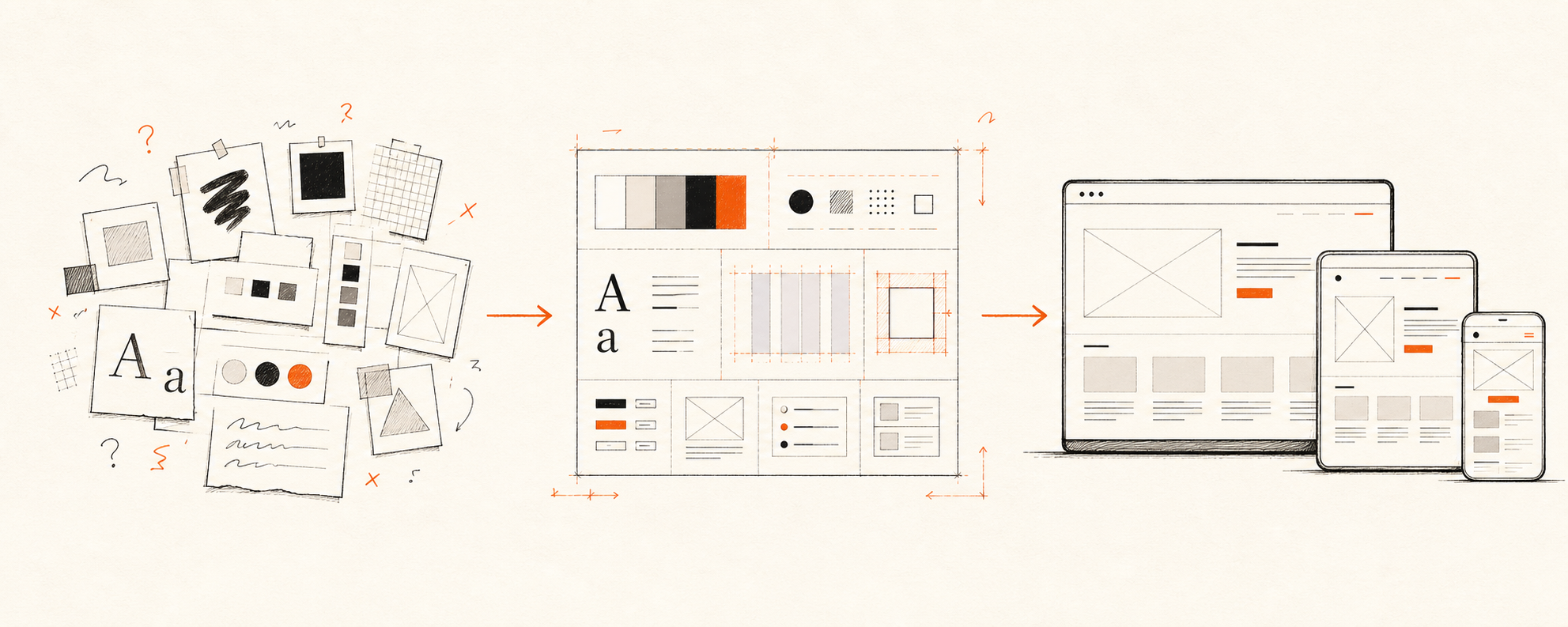
A design process grounded in real use.
- 01
Listen
We understand the business, audience, offer and places where the current identity breaks down.
- 02
Audit
We review existing assets and interfaces to find what is distinctive, useful and worth retaining.
- 03
Direct
We establish a focused creative direction and explain the decisions behind it before expanding the system.
- 04
Apply
We test the direction with real content across the screens and materials that matter most.
- 05
Systemise
We turn approved patterns into reusable components, templates and clear usage guidance.
- 06
Handover
We organise final assets and explain how the system should evolve without losing its character.
Designed to survive real work
A design system should reduce debate, not create more of it.
The useful test is whether the next page, campaign or product decision becomes easier. We design for the people maintaining the system as well as the people seeing it.
Purposeful distinction
A recognisable direction based on the business, not a collection of fashionable visual effects.
Accessible colour
Colour roles and contrast decisions that support readable interfaces and meaningful states.
Responsive typography
Type scales and line lengths designed for reading across phones, tablets and larger screens.
Real-content testing
Designs tested with representative headings, images, forms and edge cases rather than idealised filler.
Coherent interaction
Buttons, links, forms and feedback states that look related and behave predictably.
Asset discipline
Clear file formats, naming and export guidance so quality is not lost during everyday use.
Consistent, not rigid
A small number of strong rules with enough flexibility for different content and contexts.
Documented rationale
Guidance that explains why a decision exists, helping future work stay intentional.
What your team receives
A usable system, not a presentation you cannot operate.
Identity principles
A concise explanation of the character and choices that hold the system together.
Visual assets
Approved identity assets and practical formats for the agreed applications.
Design tokens
Named colour, typography and spacing decisions suitable for digital implementation.
Interface patterns
Reusable components and states for the agreed website or product surfaces.
Usage guidance
Examples, constraints and common mistakes explained in plain language.
Rollout plan
A sensible order for updating the places where inconsistency matters most.
Standards behind the work
Design decisions should be explainable.
Our approach follows established principles: start with user needs, reuse proven patterns, design with real content and consider accessibility from the beginning.
Government Design Principles
A practical standard for starting with user needs and making services simple.
Read the primary sourceGOV.UK Service ManualMaking services accessible
Why accessibility belongs in discovery and design rather than a final check.
Read the primary sourceW3CWeb Content Accessibility Guidelines 2.2
The recognised technical standard for accessible web content and interfaces.
Read the primary sourceFAQ
Questions about design and identity.
Do we need a completely new brand?
Usually not. We first identify which parts of the existing identity people recognise and which parts create inconsistency or no longer fit the business. A focused refresh is often more useful than replacing everything.
Can you work with our existing logo?
Yes. We can build the wider visual and interface system around an existing approved logo. If the source artwork is poor or important variants are missing, we will identify that before agreeing the scope.
What is the difference between brand identity and a design system?
Brand identity defines how the business should be recognised. A digital design system turns that direction into repeatable interface decisions such as typography, colour roles, components, states and responsive behaviour.
Will the design work for social media and printed material?
It can when those applications are included in the brief. We prioritise the places that matter most, then define how the shared identity adapts to each format rather than assuming one template fits everything.
How do you avoid subjective design arguments?
We connect feedback to the agreed audience, purpose and system rules. Personal taste still exists, but decisions become easier when everyone is judging the same problem rather than choosing isolated favourites.
Do you provide the final source files?
The agreed deliverables, formats, ownership and any third-party licence conditions are stated in the proposal. We organise the approved assets and explain how they should be used during handover.
Give the business one recognisable voice.
Show us where the identity feels inconsistent or difficult to use. We will shape the right design scope during the quote phase.
Start a project