
SEO and sustainable growth
Earn discovery by being genuinely useful.
We improve the technical paths, page structure and content that help people find the right answer and decide whether your business fits. Measurement guides the next improvement, without pretending rankings can be guaranteed.
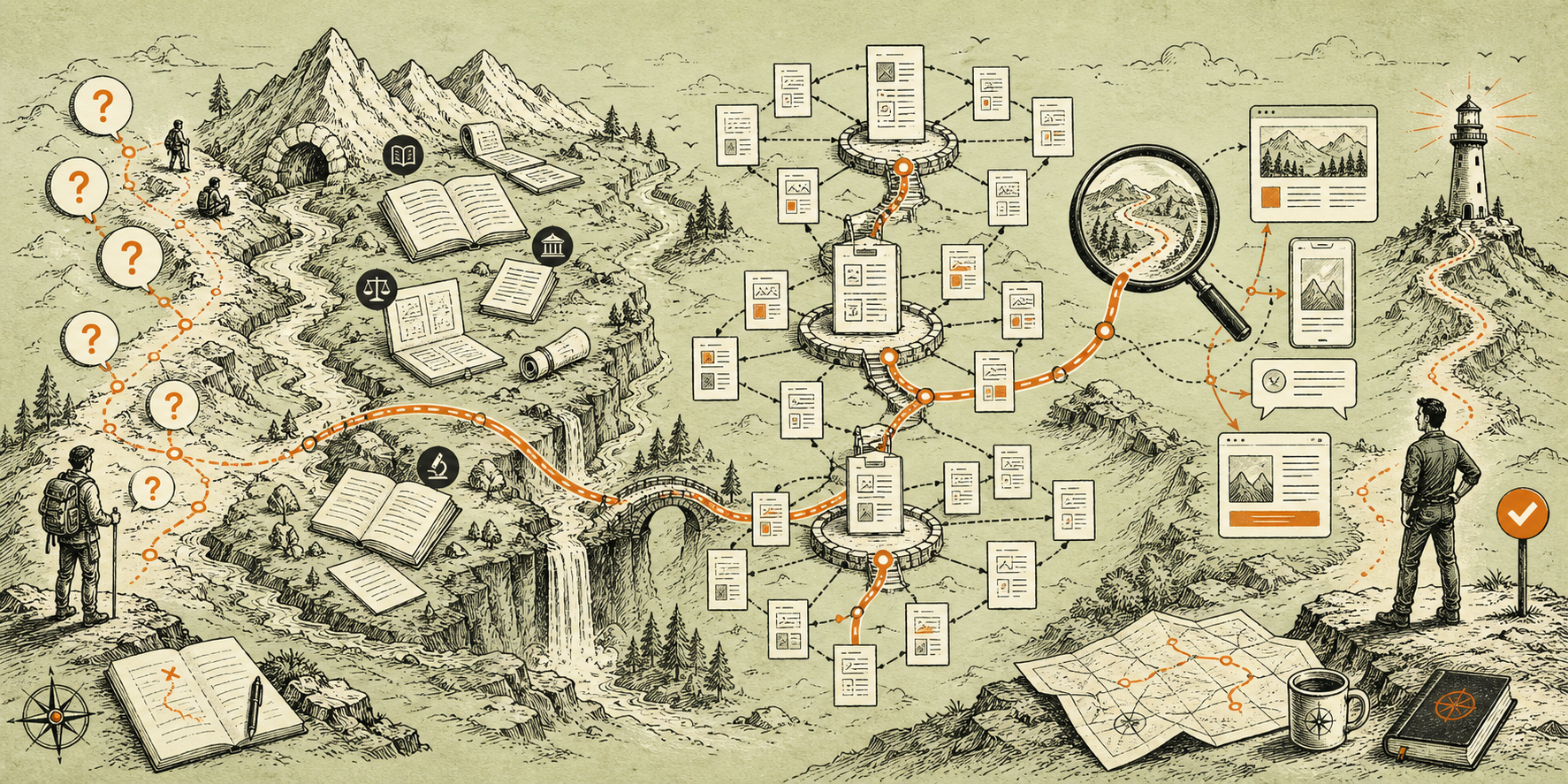
Search visibility is an outcome of useful, connected work.
A page should satisfy the reader who arrives on it, explain how it relates to the rest of the site and give search systems consistent technical signals. Publishing more words is not a strategy when the information is thin or repeated.
We improve foundations, answer distinct questions and use evidence to decide what deserves attention next. Growth should make the website more useful, not merely larger.
For businesses with useful knowledge people struggle to find
Build discovery around real questions, strong sources and useful pages.
This work fits businesses whose expertise is hidden inside thin service pages, disconnected articles or a technically weak site. We improve the routes into that knowledge without manufacturing volume or promising a ranking nobody controls.
Can the page be found
Remove technical and structural barriers that make important pages difficult to crawl, understand or reach internally.
Does it answer the question
Create substantial, distinct information that helps a real reader rather than padding a target phrase.
What should improve next
Use consent-aware evidence, business priorities and content quality to choose the next useful action.
Growth work, organised by evidence
Technical SEO foundations
Review crawlability, indexation signals, metadata, canonicals, sitemaps, performance and structured data.
Audit · Priorities · Implementation · VerificationService content strategy
Give each important offer a distinct purpose, useful detail and a clear place in the site architecture.
Intent · Page briefs · Copy · Internal linksEditorial authority
Build articles and guides around real questions, first-hand knowledge and sources a reader can inspect.
Research · Source map · Writing · Editorial reviewLocal discovery
Create genuinely local routes and consistent business information only where the facts can be verified.
Local pages · Business profile · Citations · ReviewsMeasurement and improvement
Turn approved search and website data into priorities instead of reporting numbers without a decision attached.
Search Console · Analytics · Queries · ExperimentsUseful knowledge becomes discoverable
From isolated questions to a connected body of answers.
We group real questions, map them to distinct pages, strengthen the technical relationships and use evidence to maintain the content over time.
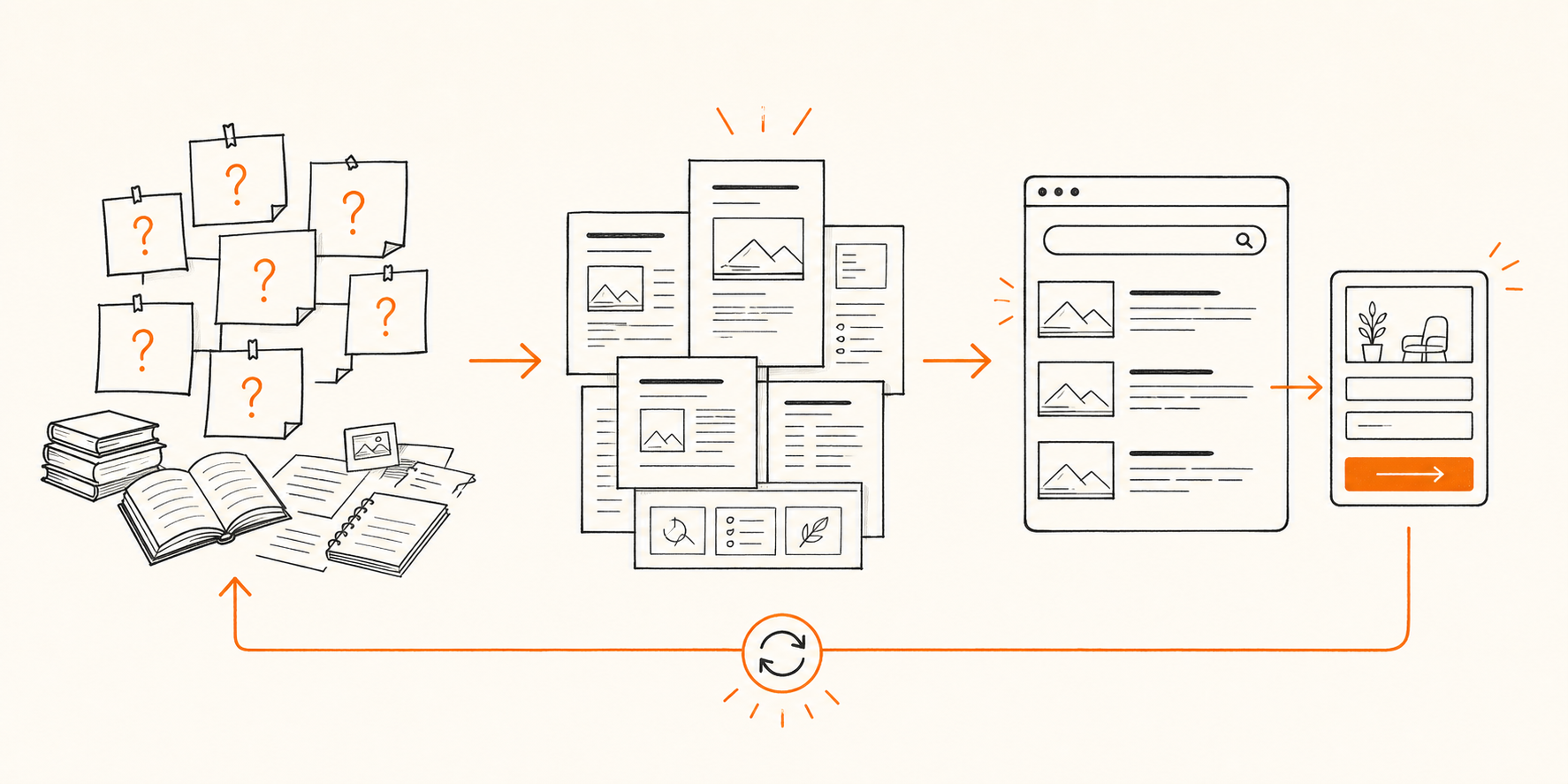
A search process without shortcuts.
- 01
Diagnose
We review the site, business priorities, available evidence and the searches relevant to real customer decisions.
- 02
Prioritise
We separate technical blockers, content gaps and optional improvements, then order them by likely value.
- 03
Structure
We clarify page purpose, information architecture, internal links and the role of each important content route.
- 04
Improve
We implement agreed technical changes and create or revise content with sources and editorial review.
- 05
Verify
We check that pages are accessible, crawlable, internally connected and consistent with their visible metadata.
- 06
Learn
We use approved evidence to decide what to maintain, expand, consolidate or stop doing next.
Built for people and machines
Good discovery work survives outside a keyword spreadsheet.
The content must still be accurate, readable and useful when someone lands directly on the page or an answer system extracts part of it. Technical signals support that work, but do not replace it.
Distinct page purpose
One primary question or decision per route, avoiding thin pages that compete with one another.
People-first content
Original, well-organised information written to help the intended reader complete a real task.
Source discipline
Primary sources used where facts, standards or changing platform behaviour need support.
Crawlable structure
Descriptive routes, internal links and page hierarchy that make relationships understandable.
Accurate metadata
Titles, descriptions, canonicals and social metadata kept consistent with the visible page.
Appropriate structured data
Schema markup used only when it accurately represents content a visitor can see.
Accessible reading
Headings, link text, language and responsive layouts designed for comprehension.
Privacy-aware evidence
Measurement choices agreed before non-essential tracking and tied to decisions the business can act on.
What makes growth maintainable
Your team should understand why each priority exists.
Baseline review
A clear account of current technical and content conditions, including evidence limits.
Priority backlog
Ordered actions with reasoning, dependencies and a practical definition of done.
Content map
The role, audience and primary question for important service and editorial pages.
Source record
References and review notes for factual or standards-based content where appropriate.
Measurement plan
Approved sources, useful questions and the decisions each measure should inform.
Review rhythm
A proportionate cycle for maintaining, consolidating and improving useful content.
Standards behind the work
There are no secret switches for first place.
Google's own guidance is clear that SEO helps search systems understand content and users decide whether a result is useful. Helpful, reliable and people-first information remains central.
Search Engine Optimization Starter Guide
Official guidance on site organisation, crawlability and useful search presentation.
Read the primary sourceGoogle Search CentralCreating helpful, reliable, people-first content
Questions for assessing whether content offers original and substantial value to readers.
Read the primary sourceW3CWeb Content Accessibility Guidelines 2.2
The recognised standard used to inform accessible content and navigation.
Read the primary sourceFAQ
Questions about SEO and growth.
Can you guarantee a first-page ranking?
No. Search results are controlled by search platforms and influenced by competition, relevance, quality, technical conditions and many other factors. We explain the work, evidence and trade-offs without promising a position we cannot control.
Does every business need regular blog posts?
No. A business needs useful content for the questions and decisions that matter. That may mean improving core service pages, creating a small number of substantial guides or consolidating weak material instead of publishing on a fixed calendar.
What is included in a technical SEO review?
The scope can cover crawlability, indexation signals, internal links, metadata, canonicals, sitemaps, structured data, page performance and migration risks. We agree the depth and implementation responsibility before starting.
Can you help with local search visibility?
Yes, where the service area, business details and local relevance can be verified. We can review local pages and Google Business Profile support without inventing addresses, locations or local proof.
How do you use AI in content production?
Tools may support research organisation, drafting or quality checks, but they do not replace source review, business knowledge or editorial responsibility. Public content is checked for accuracy, usefulness and duplication before it is treated as ready.
How long does SEO take to work?
There is no universal schedule. Technical fixes, crawling, competitive conditions and content quality move at different speeds. We set observable implementation and review points, then use available evidence rather than promising a generic result date.
Make the next useful answer easier to find.
Tell us which services or questions matter most. We will review the current site and shape a practical priority during the quote phase.
Start a project